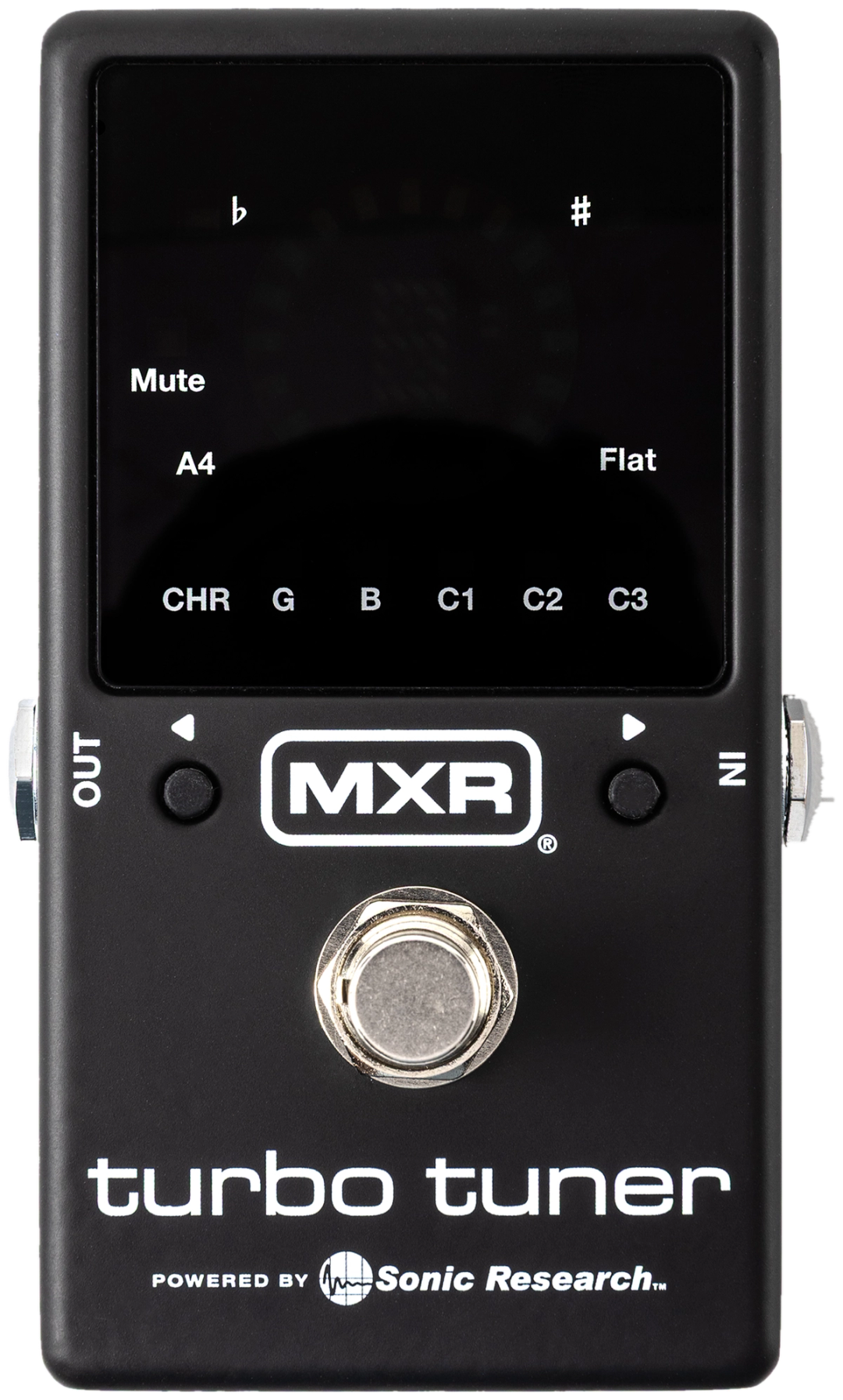
MXR Turbo Tuner puts Sonic Research's strobe engine in an MXR box
Sonic Research designed it, Dunlop builds it: the M400 Turbo Tuner keeps the ST-300's strobe feature set and adds a switchable buffer and a dimmable display.
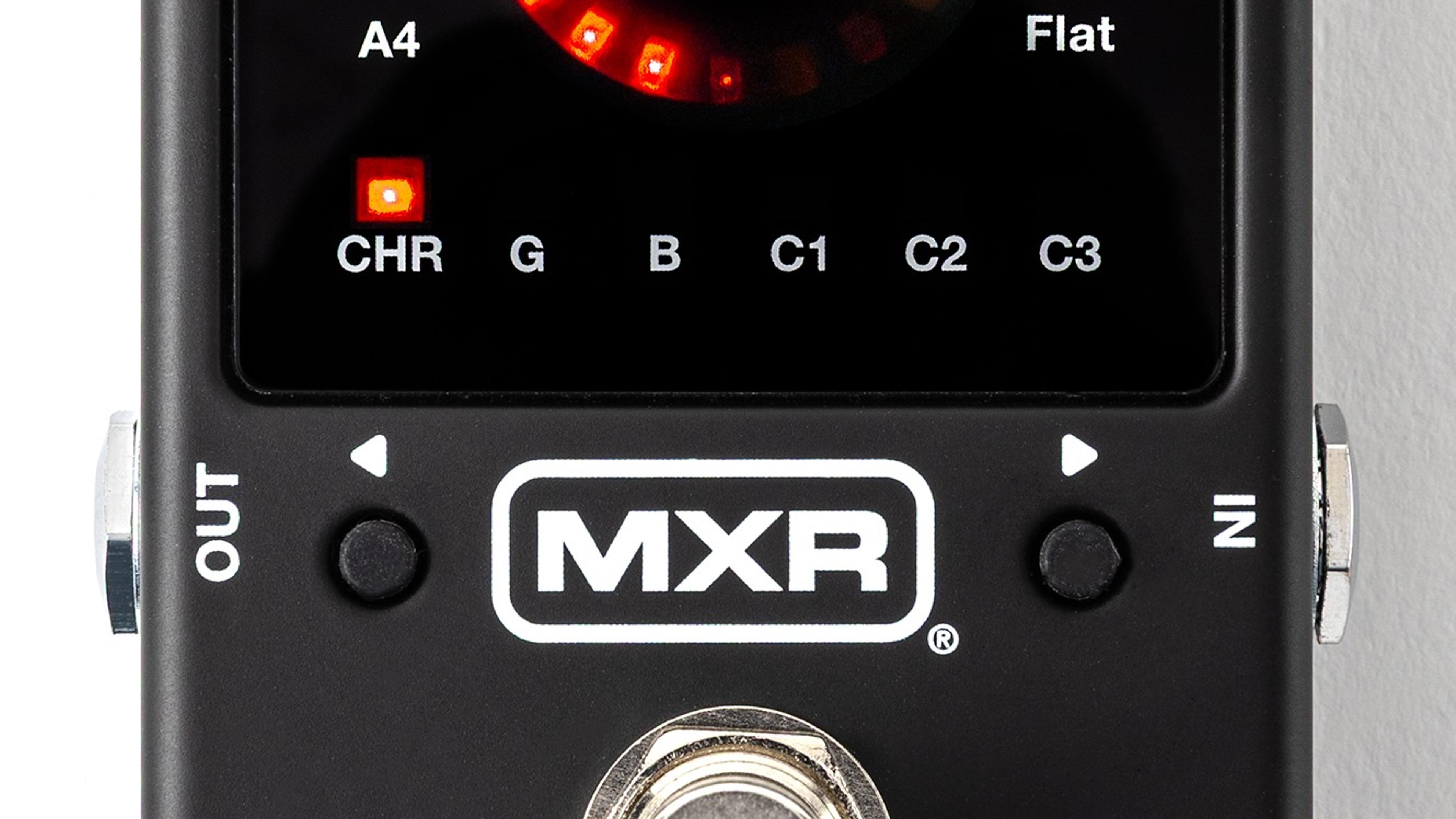
Sharp spins right, flat spins left, and the closer you get, the slower it crawls. That is the whole display on the Turbo Tuner, a ring of LEDs with no bouncing needle, built on the core engine of the original Sonic Research Turbo Tuner. Sonic Research did the design, Jim Dunlop handles production, marketing and distribution, and the result wears an MXR badge.
Sonic Research says the M400 keeps everything its ST-300 did and adds a switchable buffer. The toggle sits inside, under the bottom plate. Set to TB, it behaves like the original Turbo Tuner: relay true bypass, output muted while you tune. Slide it to BUFF and three modes open up: mute while tuning, pass the signal straight through with the tuner running, or leave the tuner always on and use the footswitch as a mute. Dunlop pitches the buffer as a way to keep your high end intact over long cable runs.
Two small arrow buttons step through six presets. Chromatic reads all twelve notes, while Guitar and Bass listen only for open strings and show the string number instead of a note name. Three custom slots start out as standard guitar, drop D and six-string bass. Any of the five non-chromatic presets can be reprogrammed for up to 12 strings, with offsets of ±50 cents in 0.1-cent steps, or turned into a custom temperament that nudges a chosen note sharp or flat everywhere it appears. Flat tuning drops everything by up to nine semitones, and the A4 reference moves anywhere from 300 to 599.9 Hz.
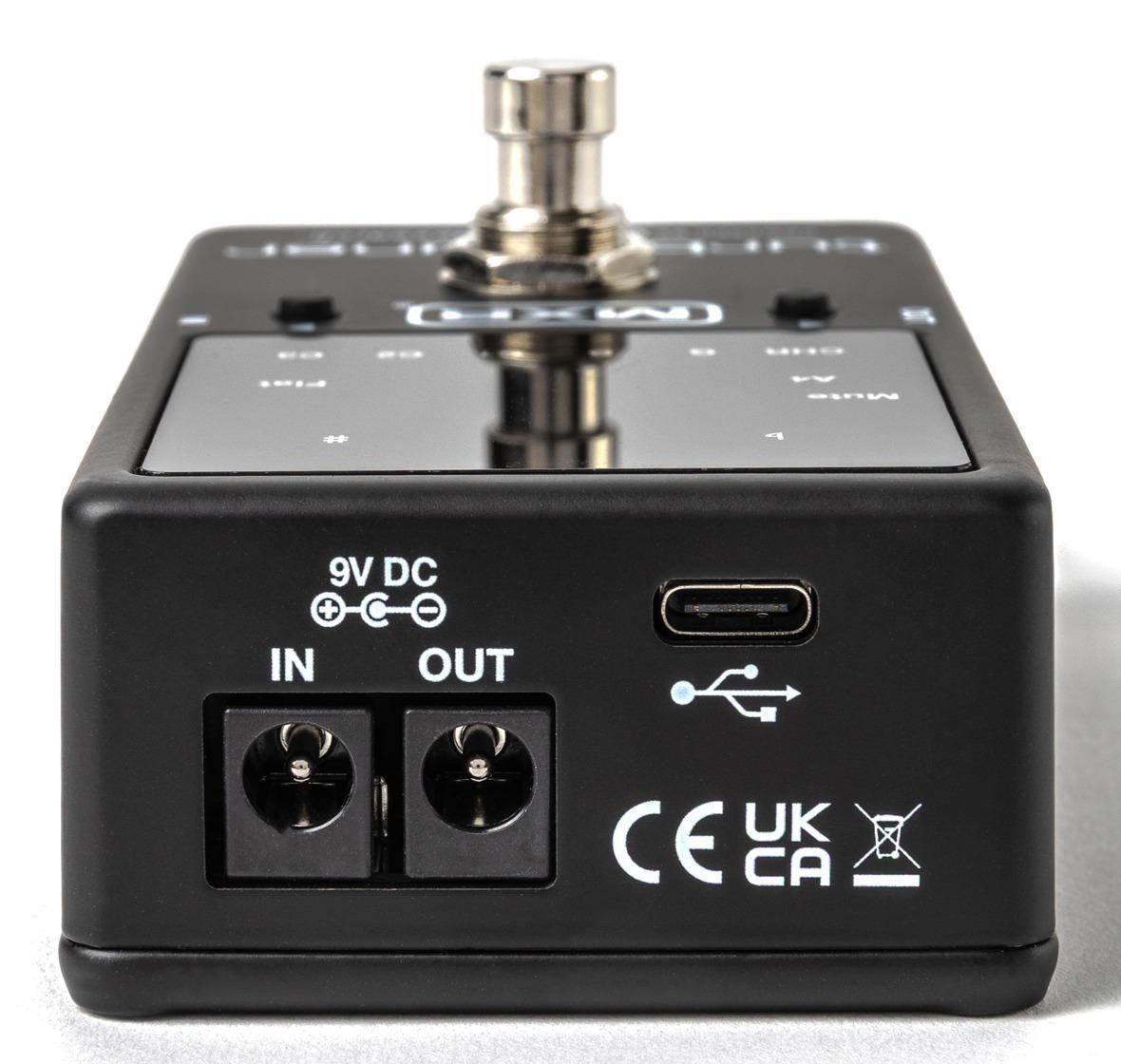
Dunlop rates accuracy at ±0.02 cents across a C0 to C8 range. The display has four brightness levels, a USB-C port takes firmware updates and the editor software, a 9 V DC output passes power on down the board, and a 9 V battery fits under the bottom plate. Full specs are on our Turbo Tuner product page.
Sonic Research's own site lists the M400 as shipping now, and the wider rollout into stores runs through Dunlop, which has the details on its MXR Turbo Tuner page.