EAE Scattering builds stereo reverb from fluttering taps
Scattering skips misty all-pass fog for fluttering multi-tap stereo space — EAE’s first true stereo, with analog preamp, filter, MIDI, and morphing.
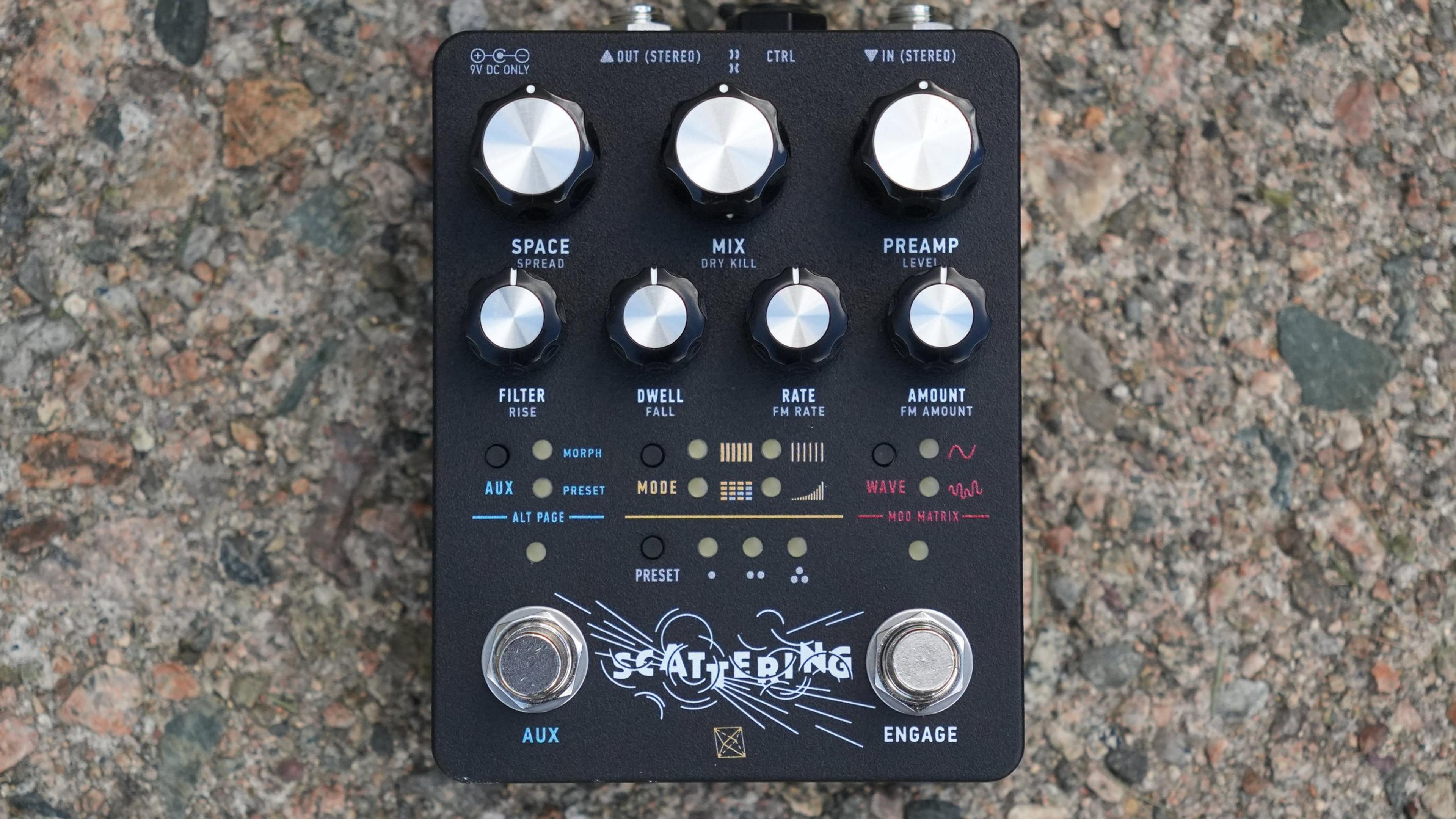
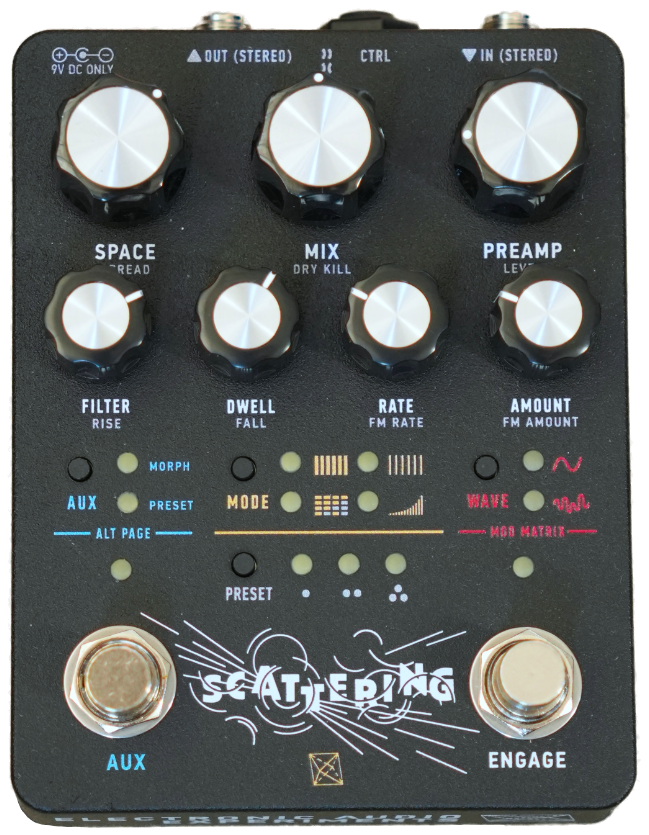
Tapped delay lines instead of misty all-pass fog: Electronic Audio Experiments has released Scattering, the Boston maker’s first true-stereo reverb. Four modes start from the staggered tap ratios of the discontinued MN3011 bucket-brigade chip — the same family of echoes that powered EAE’s short-lived Hypersleep.
John Snyder is clear that Scattering is not a Hypersleep remake. It keeps the lively, percussive character of those multi-tap echoes, then pushes further with digital architecture that skips traditional diffusion. The result, EAE says, holds transients instead of smearing them into atmosphere — closer to specular reflections than frosted-glass reverb.
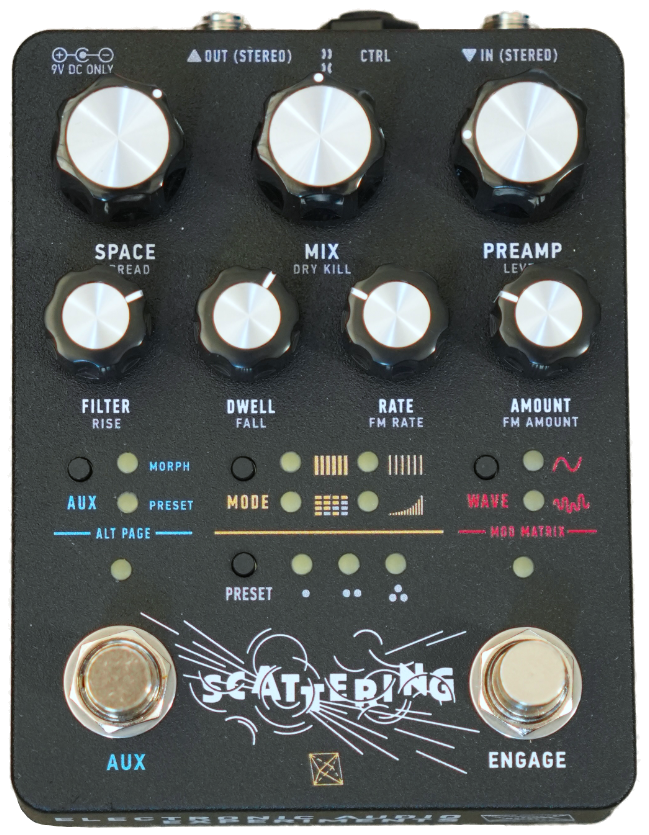
The signal path is hybrid on purpose. A stereo analog preamp can stay clean or push saturation into the reverb; a stereo two-pole low-pass Filter sits on the wet output; Mix is an analog VCA from full dry to full wet. Space stretches time and tap separation (and will artifact at longer settings), while Dwell feeds the tank into itself and can oscillate in some modes. An assignable LFO with periodic or random waves, expression morphing between two knob states, 16 presets, and full MIDI round out the control layer.
I/O is TRS stereo in and out on a Hammond 1590BB2 enclosure (121 × 94 × 38 mm). Bypass is electronic, with buffered or Trails modes. Hardware and firmware changelogs on the maker product page mark Version 1 / V1.0 as the original release.
Scattering is currently marked temporarily unavailable on the Electronic Audio Experiments product page.
Electronic Audio Experiments — “Scattering Technical Demo”.
Electronic Audio Experiments — “Scattering (in the mix)”.